Ambit Automation's Oil and Gas Course trains you in piping engineering, QA/QC in welding, NDT Level 2, and industrial safety — with internationally recognised certification and placement assistance, at our campus in Ernakulam.
A career-ready profile in one of India's most in-demand technical sectors.
An Oil and Gas Course is only useful if it maps to what the industry actually needs on-site. Ambit Automation's program is built around four core disciplines — piping engineering, QA/QC in welding, non-destructive testing (NDT Level 2), and industrial safety — with a single, structured curriculum and a placement pathway at the end of it.
Every module is taught with the job in mind — reading isometric drawings, interpreting NDT results, and working through inspection scenarios you'll actually encounter on-site, not just theory in a classroom.
Freshers, ITI holders, diploma graduates, degree holders, and BTech candidates all train on the same Oil and Gas Course, with pacing adjusted to fit your existing background.
An Oil and Gas Course is only as good as the certifications and industry exposure behind it. Here's what sets Ambit Automation apart as an Oil and Gas Institute in Kochi and Ernakulam.
Our trainers bring years of field experience, translating real industry practice into a curriculum that goes well beyond theory.
TUV SUD, BSS (Govt of India approved), and ASNT NDT Level 2 certifications add real weight to your resume, in India and abroad.
A placement cell that works with you on resumes, interview preparation, and connecting you to relevant openings in the sector.
Campuses in Cochin (Ernakulam) and Chennai, giving you access to a wider industry network across South India.
Course content is shaped around what QA/QC, NDT, and piping inspection roles actually demand on the job.
Based near MG Road, Pullepady — a short walk from Ernakulam Town and Ernakulam Junction railway stations.
A hands-on Oil and Gas Course covering piping engineering, QA/QC in welding, NDT Level 2, and industrial safety — designed to take you from foundational concepts to job-ready inspection and quality-control skills, with internationally recognised certification at the end.
If the oil and gas industry has caught your attention, this course is built to get you industry-ready. It covers piping engineering, quality control in welding, non-destructive testing, and industrial safety in a curriculum designed to bridge classroom learning with real, on-the-job practice.
Trainers with years of field experience lead the program, so you're learning from people who've actually worked the roles you're training for. The course adapts its pace to different educational backgrounds — from Plus Two and ITI candidates to BTech graduates — while keeping the same practical core and certification pathway for everyone.
Beyond the technical grounding, the course builds genuine industry exposure — the kind that helps you make sense of regulatory requirements, inspection standards, and the sector's ongoing shift toward more rigorous quality control. You'll also connect with peers and industry professionals along the way, which matters just as much as the syllabus itself.
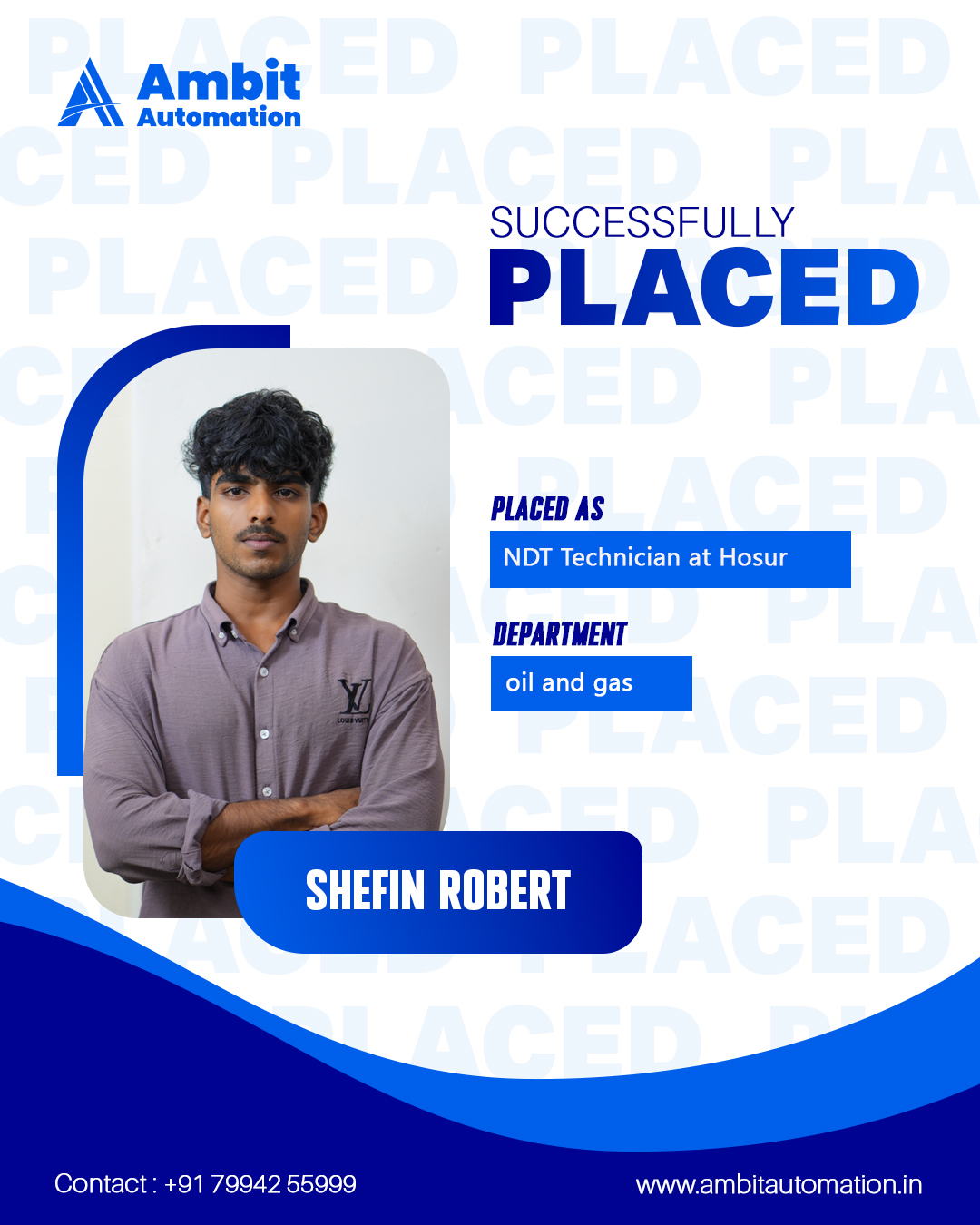
Meet some of our graduates who have completed their Oil and Gas Course at Ambit Automation and are now building careers in the industry.
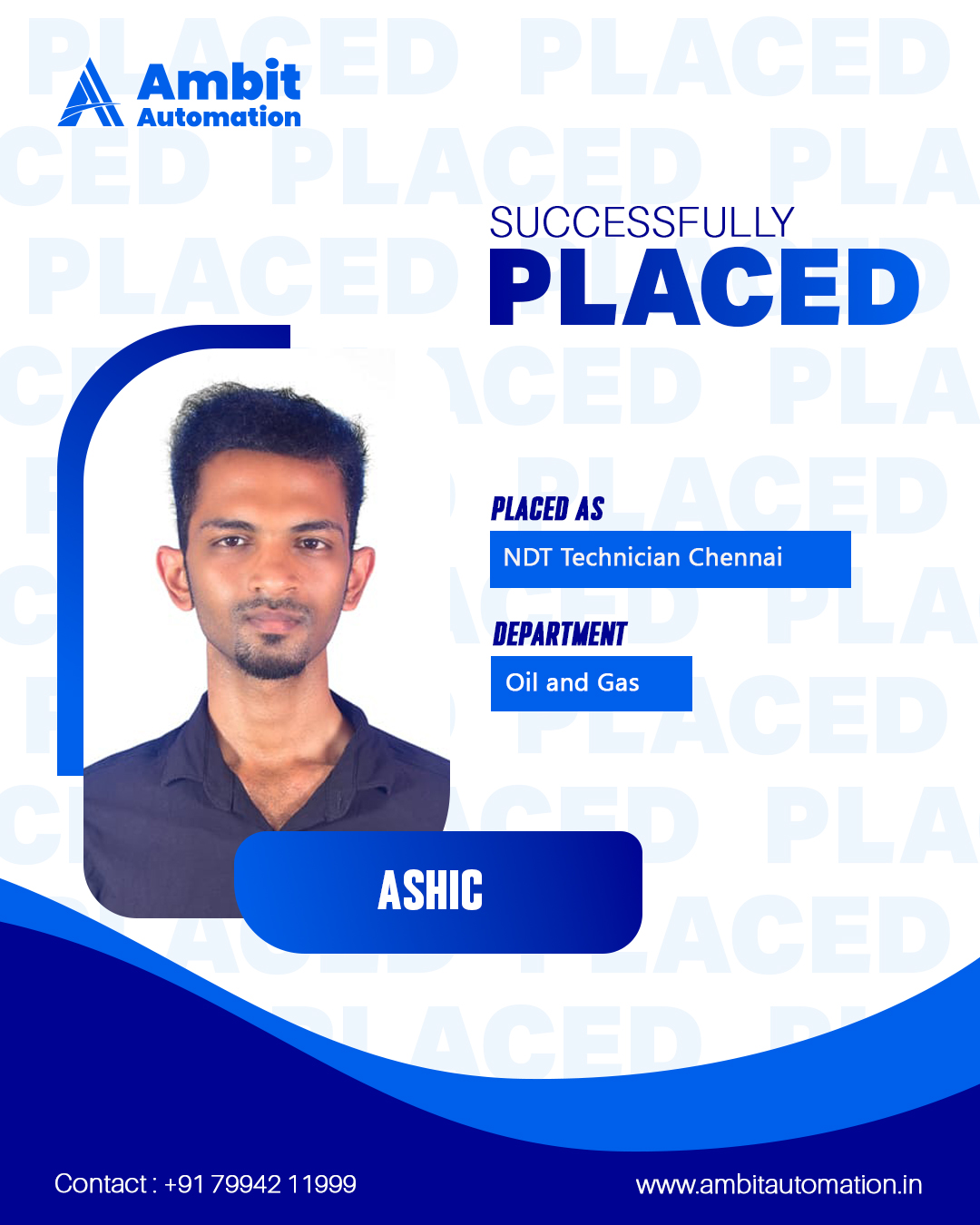
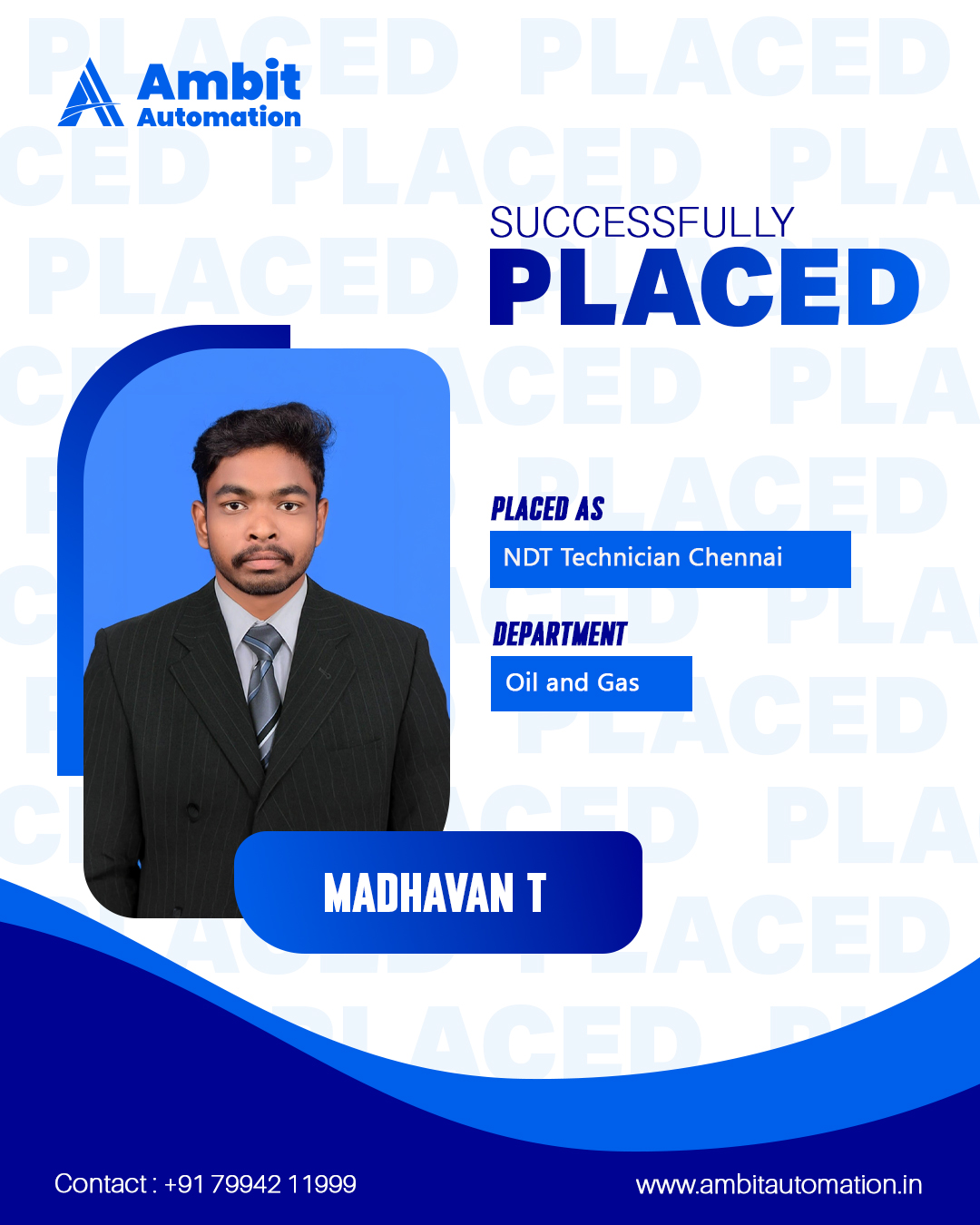
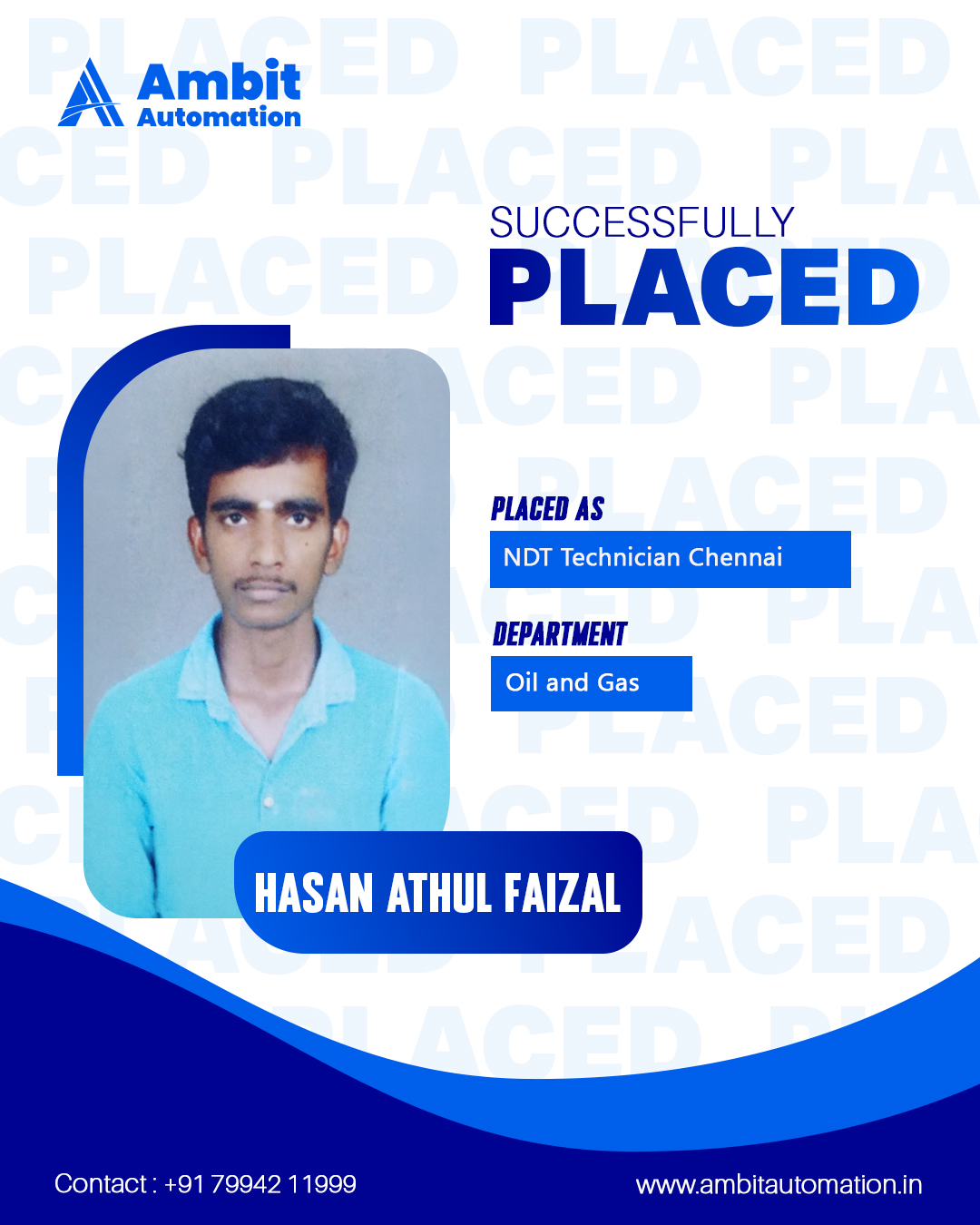

Tap or click on each module to expand and view the detailed topics covered.
Industry exposure is what turns theory into confidence. Here's how our practical training is structured.
Start with the fundamentals of piping, welding QA/QC, and NDT — taught by trainers who've worked these roles in the field.
Move into applied practice: interpreting test results, following inspection procedures, and working through realistic quality-control scenarios.
Learn from industry veterans whose real-world experience helps you anticipate challenges before you encounter them on the job.
Finish with recognised certifications and placement support that connects your training to an actual role in the industry.
Hands-on familiarity with these inspection and quality-control methods forms the technical backbone of the Oil and Gas Course.
Surface-level inspection to catch visible defects early.
Internal inspection using radiographic imaging and film interpretation.
Detecting surface and near-surface flaws in ferromagnetic materials.
Identifying surface-breaking defects using penetrant dye methods.
High-frequency sound waves used to detect internal flaws and measure thickness.
Reading and interpreting piping drawings and layouts used on-site.
PPE standards, hazard controls, and site safety procedures.
Preparing inspection reports and quality plans to project specification.
Graduates of the Oil and Gas Course move into a range of technical and inspection-focused roles across the industry.
Design, analyse, and support the implementation of piping systems.
Uphold quality standards across welding, materials, and installation work.
Carry out non-destructive testing across VT, RT, MPT, PT, and UT methods.
Identify and mitigate hazards to protect people and assets on-site.
Support project planning, documentation, and cross-team coordination.
Review welds against codes and standards before project sign-off.
The course is open to a wide range of educational backgrounds. Course pacing and duration are adjusted depending on your existing qualification.
Candidates joining directly after Plus Two or ITI typically follow the fuller, 4-month track that builds foundational knowledge alongside the core curriculum. BTech, diploma, and degree holders with an existing technical base can often move through the same syllabus in a faster, 6-month intensive format. Your counsellor will confirm the right track during enrolment.
A course is only as valuable as the career it leads to. Here's how we support you after the classroom.
A team that works to connect you with relevant openings in the oil and gas sector.
Resume building, mock interviews, and career counselling ahead of your job search.
Periodic training and short-term courses to keep your skills current after graduation.
TUV SUD, BSS, and ASNT credentials recognised across industries.
Faculty with real field experience, not just classroom theory.
Train at our Cochin or Chennai centres.
Placement help, plus refresher courses well after you graduate.
The industry keeps evolving — and so does the need for skilled, certified professionals who can keep up with it.
Economic growth, technological change, and global energy needs keep skilled roles in demand.
Certifications like TUV SUD and ASNT are recognised well beyond India, opening international opportunities.
From advanced drilling techniques to renewable energy integration, the sector rewards professionals who adapt.
Our Kochi campus sits in one of Ernakulam's most well-connected areas, making it easy to reach whether you're commuting from within the city or travelling in from elsewhere in Kerala.
66/2778, First Floor, Raja Arcade, Chittoor Road, Pullepady, Ernakulam, Kochi, Kerala 682035
The campus is located just off MG Road in Pullepady, one of Kochi's central commercial and educational hubs, putting it within easy reach of most parts of the city.
Answers to common questions about our PG Diploma and Diploma programs in Oil and Gas — from eligibility and curriculum to career outcomes and placement support.
A PG Diploma in Oil and Gas is a specialized postgraduate course designed to equip individuals with advanced skills and knowledge in the oil and gas industry. It covers a wide range of topics, including reservoir engineering, drilling engineering, production engineering, and petroleum economics.
Typically, a bachelor's degree in engineering (mechanical, chemical, petroleum, or related fields) is required for admission to a PG Diploma in Oil and Gas. Some institutions may also consider relevant work experience.
After completing a PG Diploma in Oil and Gas, you can find job opportunities in various roles, such as Well Engineer, Reservoir Engineer, Drilling Engineer, Production Engineer, Petroleum Economist, Geophysicist, and Petrophysicist.
The salary of a person with a PG Diploma in Oil and Gas can vary depending on factors such as experience, skills, location, and the specific role. However, it is generally higher than other industries.
Reservoir engineering involves the study of hydrocarbon reservoirs to optimize production. It includes tasks like reservoir characterization, simulation, and production forecasting.
Drilling engineering focuses on the design, planning, and execution of drilling operations to extract oil and gas from underground reservoirs.
Production engineering deals with the optimization of oil and gas production from wells. It involves tasks like well performance analysis, production optimization, and facility design.
Petroleum economics involves the economic analysis of the oil and gas industry. It includes topics like cost analysis, risk assessment, and project evaluation.
Ambit Automation is a renowned institute that offers high-quality training in the oil and gas industry. It has experienced faculty, state-of-the-art facilities, and a strong industry network.
Yes, Ambit Automation provides placement assistance to its students. They have a strong network of industry contacts and help students find jobs in top companies.
The fees for a PG Diploma in Oil and Gas at Ambit Automation vary depending on the specific course. It is best to contact the institute directly for the latest information.
Ambit Automation offers both classroom and online training programs for its PG Diploma in Oil and Gas courses.
A Diploma in Oil and Gas is a specialized course designed to provide foundational knowledge and practical skills in the oil and gas industry. It covers a range of topics, including basic engineering principles, safety procedures, quality control, and field operations.
Typically, a 10th or 12th-grade pass is required for admission to a Diploma in Oil and Gas. Some institutions may have specific requirements, such as a science background.
After completing a Diploma in Oil and Gas, you can find job opportunities in various roles, such as Safety Officer, Technician, Helper, Rig Floor Hand, Production Operator, and Quality Control Inspector.
The salary of a person with a Diploma in Oil and Gas can vary depending on factors such as experience, skills, location, and the specific role. However, it is generally competitive and offers good growth opportunities.
Core subjects in a Diploma in Oil and Gas typically include maintenance techniques, basic engineering principles, safety procedures, quality control, field operations, drilling operations, and production operations.
Many Diploma programs in Oil and Gas include practical training components, such as field trips, industry visits, on-the-job training, and laboratory experiments.
Safety certifications, such as Basic Safety Training (BST), Well Control, and H2S Awareness, are essential for working in the oil and gas industry. These certifications are often acquired during or after completing a Diploma program.
Ambit Automation is a renowned institute that offers high-quality training in the oil and gas industry. It has experienced faculty, state-of-the-art facilities, and a strong industry network.
Yes, Ambit Automation provides placement assistance to its Diploma students. They have a strong network of industry contacts and help students find jobs in top companies.
The fees for a Diploma in Oil and Gas at Ambit Automation vary depending on the specific course. It is best to contact the institute directly for the latest information.
Ambit Automation offers both classroom and online training programs for its Diploma in Oil and Gas courses.
Ambit Automation may offer scholarships or financial aid to eligible students. It is best to contact the institute directly for more information.
While it is possible to get a job in the oil and gas industry without a Diploma, having a formal qualification can significantly improve your chances of getting hired and starting at a higher level.
Talk to our team about the Oil and Gas Course — get the syllabus, fees, and batch dates on WhatsApp.